

Pollinators provide so many benefits to the landscape and help make our gardens more productive and meaningful!
Whether you’re integrating more pollinator plants into your existing landscape or planning your garden from scratch, you can establish a more productive and diverse ecosystem right in your own backyard with beautiful, blooming plants for bees, butterflies, and hummingbirds.
Here are some guidelines and simple steps you can take, from the plants you select to the ways you clean up your space in the Fall, that will make your garden to make it more attractive to pollinators. Plus, we include ways to make each pollinator-friendly option elevated and design-forward to keep your garden in line with your visual goals for your space.
Why Pollinators Are Essential for a Beautiful Garden
From blooming wildflowers to edible plants, pollinators play an irreplaceable role in maintaining biodiversity, food security, and ecological balance. Pollinators are critically important in ensuring edible plants produce fruit and vegetables. These important insects create balance and are part of a thriving ecosystem when they work in tandem with other beneficial bugs in the garden.

Beyond their ecological value, there's something undeniably poetic about seeing a butterfly flutter by on a sunny afternoon, or a hummingbird zoom past in search of a sweet treat, or to see a bee nestled in its favorite flower overnight. Pollinators are some of the essential players in a garden that work hand-in-hand with the plants, structure, and style to help create a sense of place.
Pacific Northwest Pollinators
The most charismatic pollinators in Pacific Northwest gardens are bees, butterflies, and hummingbirds. These beloved pollinators visit flowers to consume the sweet floral nectar for energy and in the process, collect pollen which is then transferred to the next flower they visit.


Bees
Honeybees, Bumblebees, Native Bees, Mason Bees
Bees, the primary pollinator for so many of our food crops and garden plants, are the tiny heroes of our ecosystem! From blooming wildflowers to edible plants, bees play an irreplaceable role in maintaining biodiversity, food security, and ecological balance. Bees are particularly drawn to pollen-rich flowers that have exposed anthers or clusters of tiny flowers and are highly attracted to the color yellow.
Butterflies
Swallowtail, Admiral, Duskywing, Monarch Butterfly
Butterflies are equally beautiful and beneficial pollinating insects. As caterpillars they may munch selectively on some leaves, but as flying butterflies they make up for any damage with their attractive form and helpful pollination. While it might be tempting to spray for caterpillars, just remember that butterflies come from caterpillars! Butterflies love fragrant and nectar-rich flowers that are made up of many small clusters of tube-like flowers.
Hummingbirds
Anna’s, Rufous, Costa’s, Allen’s Hummingbird
Hummingbirds are like little flying jewels that love visiting flowers to drink nectar, and in the process help spread pollen from flower to flower. These territorial birds will return to your garden year after year to pollinate plants, and some may even take up year-round residency! Hummingbirds love tubular flowers in a range of colors, with a special preference for red, peach, pink, and salmon. For some excellent, garden-friendly options, check out our blog on the 7 Best Hummingbird Plants for the Garden and our blog on Gardening to Attract Hummingbirds.
Other Important PNW Pollinators
Beyond the “big three” pollinators in the Pacific Northwest, other insects and even mammals can act as pollinators. Ants act as slow and steady pollinators of nectar-rich plants. Moths visit white, fragrant flowers at night to feast on nectar and provide pollination. Flies, especially hoverflies, are phenomenal pollinators of flat, umbel flowers like Yarrow and Fennel, and also act as excellent predators of aphids.
Remember, bugs in the garden serve a purpose and “issues” only tend to arise when the balance is off, so seeing some flies, wasps, moths, ants, beetles, even bats is a good thing. Find more information about attracting and using beneficial bugs in your garden on our blog!
Easy, Guaranteed Ways to Attract More Pollinators
By creating a pollinator garden, you can provide a welcoming habitat for bees, butterflies, and hummingbirds, ensuring their survival while enjoying the beauty of a thriving garden. It’s easy to “bee” a part of the solution and help attract pollinators to your garden with these simple steps!
1. Flower Power: Make sure something is always blooming.
Flowers are food for pollinators, so the best way to encourage them to visit your garden is to provide for them all year long.


While it does make sense to focus most of your pollinator planting efforts on the months that pollinators are awake and active, bear in mind that hummingbirds are year-round residents, and bees wake up earlier each year. In our changing climate, flowers are essential for pollinators to survive the colder season.
Choose a variety of flowering plants that bloom at different times throughout the year to provide a consistent food source. Check out our blog on Supporting Pollinators in Fall & Winter for more tips.
Design-Forward Tip: Take inspiration from our Landscape Design Guides. Each Landscape Style Guide has comprehensive plant palettes for creating a stylish garden start to finish. Follow those planting suggestions for a landscape that looks good year-round!
2. Play the Hits: Include high-performing, long-blooming perennials.
When it comes to planting for pollinators, you can’t beat these long-blooming, hardy perennials.
Design-Forward Tip: Use these plants in a specific color palette and repeated patterns throughout the garden and let them be the thread that stitches everything together since they are long-blooming.

Perennial plants that attract all three major pollinators:
- Bee Balm – Monarda: With its showy clusters of red, pink, or purple flowers, Bee Balm is highly attractive to bees, butterflies, and hummingbirds.
- Lavender – Lavendula: Fragrant and evergreen, this loved herb produces fragrant flower wands with clusters of purple, pink, or white flowers that attract bees, hummingbirds, and butterflies.


Perennials for attracting bees:
- Avens – Geum: Delicate, cupped petals surround fuzzy centers on Geum flowers which bloom early and often and attract bees and hoverflies.
- Catmint – Nepeta: Low-growing, fragrant Catmint foliage is topped by spikes of lavender, purple, or blue flowers that are highly attractive to bees and butterflies.
- Foxglove – Digitalis: Tall, elegant spires of bell-shaped flowers on Foxgloves provide nectar to bees and hummingbirds alike.
- Tickseed – Coreopsis: Flat yellow daisy-like flowers are a magnet for bees – some Coreposis even have dark markings to guide bees towards the center of the flower.
- Yarrow – Achillea: Flat clusters of tiny flowers in bright pops of color are a hallmark of drought-tolerant Yarrow and a favorite of native bees and hoverflies.
Perennials for attracting butterflies:
- Coneflower – Echinacea: Pointed orange cones are surrounded by petals in every imaginable color on Echinacea flowers that bees and butterflies (and a host of other pollinators) adore.
- Pincushion Flower – Scabiosa: Flat clusters of Scabiosa flowers in white, blue or pink top graceful stems on this long-blooming perennial that attracts bees, butterflies and hoverflies.


Perennials for attracting hummingbirds:
- Cape Fuchsia – Phygelius: Long, fluted flowers in sunset tones are borne on Cape Fuchsia’s sturdy foliage and are a favorite of hummingbirds.
- Hyssop – Agastache: Aromatic foliage of Hyssop gives rise to wands of fragrant, colorful flowers in a rainbow of colors that attract bees and hummingbirds.
- Sage – Salvia: The nectar-rich flowers and many species of Salvia in every color imaginable entice a host of pollinators including hummingbirds, bees, and butterflies.
3. More is More: Plant in layers with a diversity of flowers.
Make the best use of your space by planting low-growing plants, perennials, climbers, and shrubs with a diversity of flower shapes and sizes.


Bees, hummingbirds, and butterflies are attracted to a wide range of flower shapes, colors, and scents. Incorporate a variety of flower types including tubular, bell-shaped, flat, and clustered flowers to accommodate various pollinators. Planting flowering plants in clusters or “pollinator targets” helps pollinators locate and efficiently collect nectar and pollen. Plus grouping several of the same plant species together will also create a stronger visual impact and attract more bees to your garden.
Don’t forget to make use of vertical space against houses and fences for pollinator friendly climbing plants like Honeysuckle, Trumpet Vine, and Climbing Roses. Plus, the ground beneath perennial pollinators is prime for planting up with flowering groundcovers like Thyme and Kinnikinnick.
Design-Forward Tip: Stay true to a color palette. Thanks to modern plant breeding, many favorite pollinator flowers are available in a wide range of colors making it easier to stick to a tighter color palette while still attracting a range of pollinators. Each of our Landscape Design Guides illustrates two unique, cohesive color palettes to provide straightforward options for creating cohesive and attractive gardens.
4. Think Locally: Plant native plants.
Native plants are a perfect fit when it comes to supporting and encouraging visits from pollinators, especially when it comes to local PNW pollinator species.

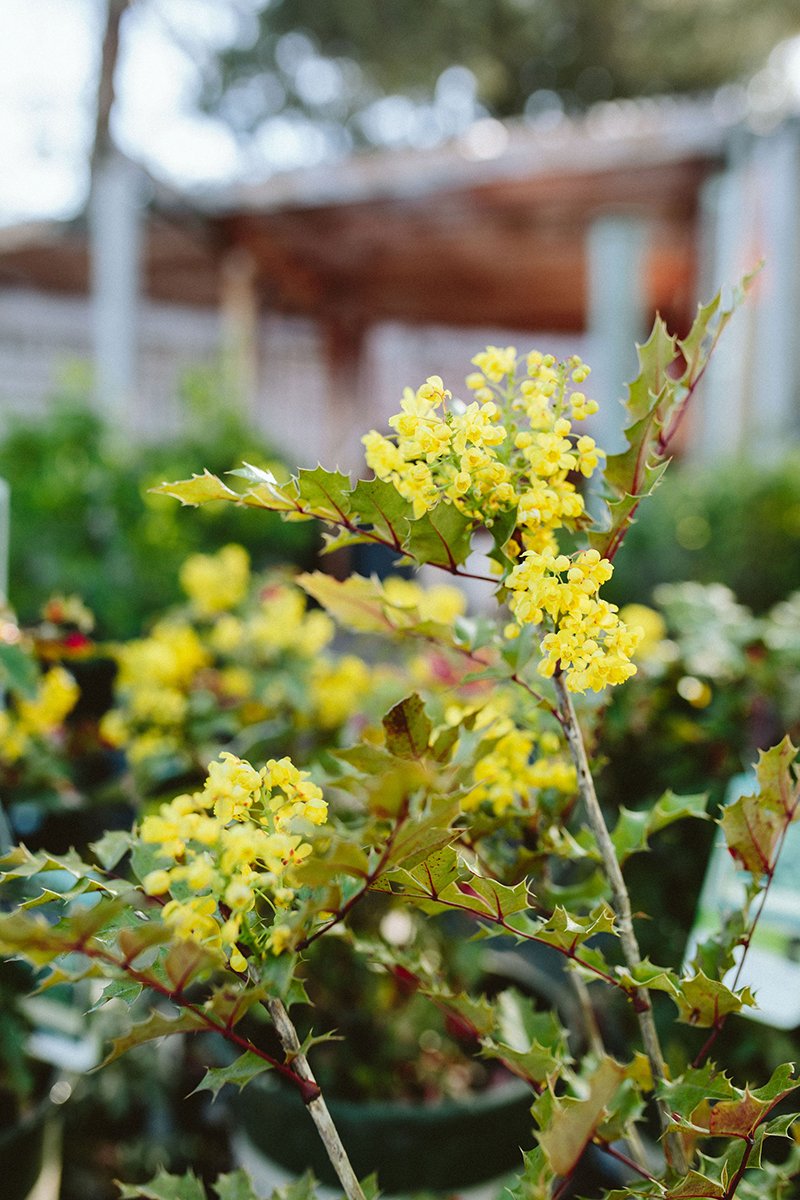

Native plants are well-adapted to the local climate and provide the best resources for local bee, butterfly, and moth species. While native plants are an excellent choice no matter the goals of your garden (our 7 Best Native Plants are rounded up here!), there are some that outperform the rest when it comes to pollinator support.
Yarrow is a long-blooming, attractive native plant (with lots of colorful nativar options) that attracts lots of bee species and helpful hoverflies as well. Oregon Grape blooms in the late Winter or early Spring and acts as a critical food source for local bee species that are waking up from hibernation. And nothing heralds Springtime like Ribes, which is a veritable hummingbird magnet with its bright pink, pendulous flower clusters!
Design-Forward Tip: Incorporate the native plants you choose into your overall design. Think of them as key plants rather than an afterthought, or worse, something that gets relegated to its own forgotten corner. Even if your aesthetic veers away from the classic PNW look, you can still repeat chosen native plants throughout your garden for an elevated look.
5. Just Add Water: Water features and birdbaths refresh pollinators, too!
Water features and birdbaths provide drinking water for thirsty pollinators.


When creating a pollinator garden, the importance of water cannot be understated. Floral nectar is sugary and energizing, but even bugs and birds need to hydrate and restore their fluids before building nests.
To make sure pollinators can access the water in your garden, your water feature has to have areas with less movement and shallow depth. Low-laying birdbaths and water fountains act as areas that pollinators can drink from. Fill a shallow dish or birdbath with fresh water and add some rocks or floating plants for the bees and butterflies to land on while drinking and provide mist or a shower to visiting hummingbirds!
Even if you have a water feature that has a lot of turbulence, you can create a pocket of shallow, still water by using river rocks or other larger stones or pavers.
Design-Forward Tip: Have a water feature custom-made to match the aesthetic of your garden. Our Design Build Residential Landscape team is incredible at creating bespoke water features that fit the look and feel of your garden while providing for wildlife. Visit the portfolio!
6. Take It Easy: Leave perennial stems up in Winter to act as nesting sites.
When it comes to boosting pollinator populations, a little untidiness goes a long way.

Bees and butterflies require suitable nesting sites to raise their young, and the hollow stems of spent perennial flowers are ideal. Though you may be tempted to cut back perennial stems and leaves after they dry up and turn brown in the Fall, its better for pollinators if you leave them in place. Solitary bees, like Mason bees, love to fill the hollow spaces in Lily and Hosta stems, so don’t discard them into the compost until temperatures have warmed and new growth emerges. You can even install bee houses specifically designed for solitary bees.
It’s also a great idea to leave some areas of bare soil or provide small piles of twigs in corners of the garden. And of course, leave your leaves! These areas are perfect Winter homes for butterflies and bees.
Design-Forward Tip: Consider the shape that plants have as a year-round feature and not just something to be enjoyed when they are green or in bloom. The attractive architecture offered by brown grasses and the artistic appearance of seedheads invites a Bohemian aesthetic that works very well in most gardens, especially in the Winter months. After all, its better to look out on something other than bare dirt!
7. Things that Kill, Kill: Avoid pesticide usage.
Pesticides are harmful to bees, caterpillars (which make butterflies), and other pollinators.

While the temptation to battle unwanted insect pests with pesticides and insecticides is strong (we get it!) consider the fact they will also kill pollinator populations and explore alternatives. Instead of using pesticides, your best line of defense is to create a healthy garden ecosystem by practicing organic gardening methods. By focusing on healthy plants and soils and utilizing companion planting to deter pests, you’ll promote natural pest control and beneficial insect populations.
If issues do arise, knock back unwanted bug populations by introducing beneficials insects or spraying them off with water. To resolve fungal issues, consider why they are there in the first place, and then prune to introduce airflow, give it more water, or move it to a more advantageous spot in the garden.
Design-Forward Tip: A beautiful garden is a healthy garden, and vice versa. To minimize stress from underwatering, weeds, or soil infertility, add a thick layer of mulch to your garden beds each Spring and Fall. This immediately improves the look of a garden bed, making it more finished and refined, while helping to reduce plant stress—the number one cause of pests!
Dennis’ 7 Dees Garden Centers have beautiful, blooming pollinator plants all year round. Our team of plant experts can help you build a garden that feels as good for pollinators as it does for people!