
Combine our 7 best drought tolerant plants for a full sun garden that will look fabulous and sustain wildlife even with reduced water and periods of drought.
Summers are getting hotter and drier in the Pacific Northwest, making the need for waterwise gardening more important than ever. If you’re replanting areas of your garden that experience hot sun and dry soils during the Summer, then drought-tolerant plants are the best option for you!
Not only are drought-tolerant plants a budget-conscious choice, as reducing irrigation and hand-watering saves time and money, they are also by far the most ecofriendly choice for gardeners. The flowers on drought-tolerant plants sustain wildlife like birds and pollinators, the plants require little pruning or upkeep, and the water savings means that watering is reduced, leaving one of our most valuable resources in streams and reservoirs rather than in landscapes.
We’ve selected seven trees, shrubs, grasses, and perennials that act as companion plants to create a show-stopping, gorgeous drought-tolerant landscape. Two distinctive color palettes are outlined to help you build the drought-tolerant and low-maintenance garden of your dreams.


Our Moody plant color palette, taken from our Bohemian Landscape Design Guide, features smoky purples, muted greens, and caramel tones to create a mysterious and eclectic landscape. The Uplifting plant color palette from our Mediterranean Landscape Design Guide uses bright pinks, lively oranges, and glowing golds to create an inviting and dynamic garden. Mediterranean and Bohemian Landscapes are both drought-tolerant by nature—download our free Landscape Design Guides to learn more about these styles, find extended plant lists, and get tons of inspiration!
1. The Best Drought-Tolerant Tree: Crape Myrtle (Lagerstroemia)

MOODY PALETTE: Lunar Magic Crape Myrtle
UPLIFTING PALETTE: Bellini Raspberry Crape Myrtle
Crape Myrtles have skyrocketed in popularity in the Pacific Northwest in the last decade thanks to their low-maintenance, drought-tolerant nature. In our climate, Crape Myrtles bloom in late July and go strong until October, with colorful flowers in shades of pinks, purples, reds, and whites. Newer introductions sport dark, dramatic foliage, making them a win even if poppy colors aren’t your style.
When they lose their leaves in Fall, attractive, mottled bark keeps these plants interesting until they leaf out again in Spring (a bit later than you’d expect!). Best of all, these fantastic, low-water trees stay under 20 feet tall and are an excellent choice for urban gardeners with small landscapes who want an easy-care, drought-tolerant tree.
2. The Best Drought-Tolerant Large Shrub: Smoke Bush (Cotinus)
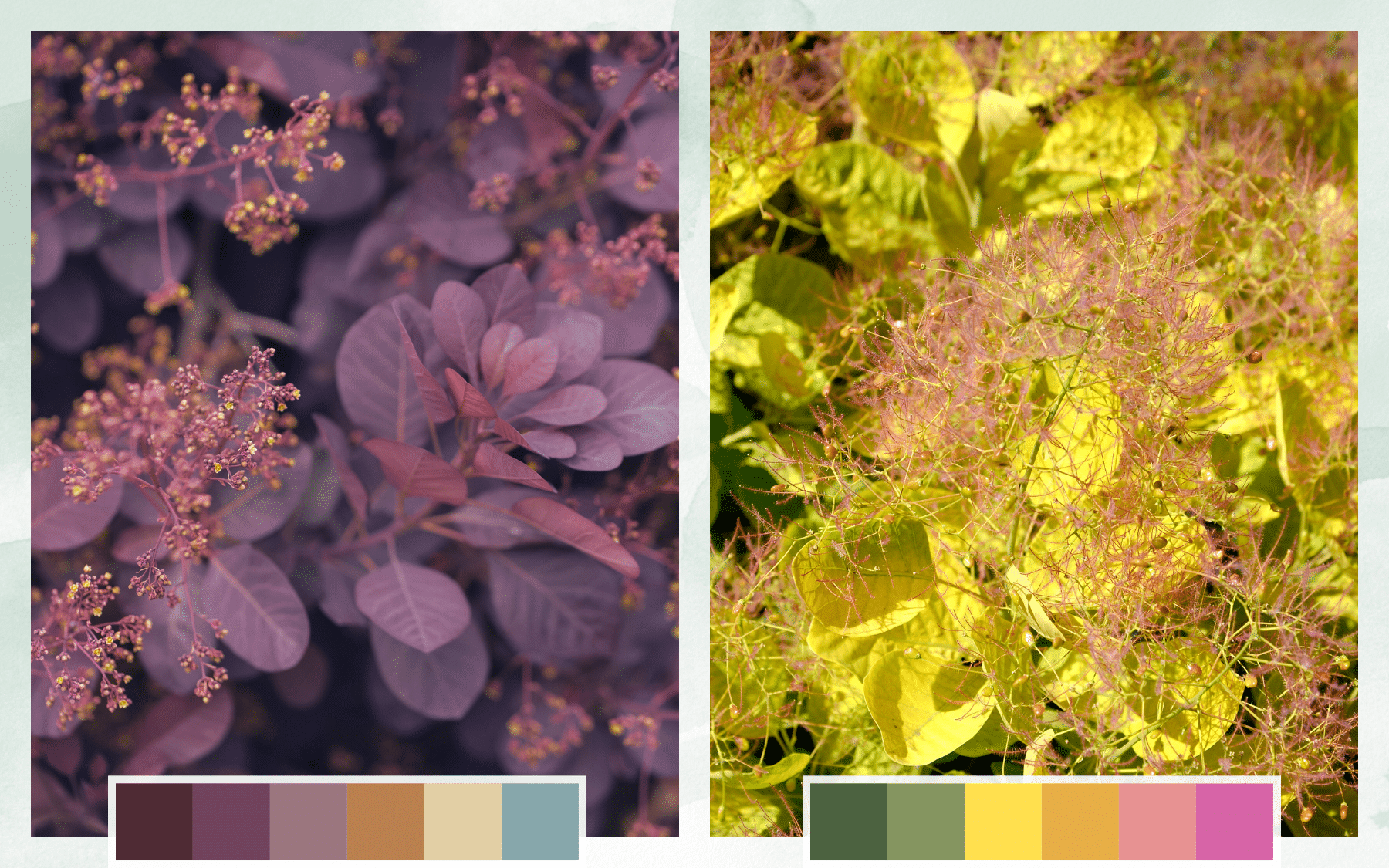
MOODY PALETTE: Royal Purple Smoke Bush
UPLIFTING PALETTE: Golden Spirit Smoke Bush
Smoke Bushes are one of those plants that can be easily overlooked until they leap onto center stage in early Summer. These multi-stemmed large shrubs become completely clouded by dreamy plumes of airy flowers that give the outline of plants a hazy, otherworldly quality. The unique flowers are typically softy, dusky pink and are borne on plants with foliage that can be lime green, rich purple, or soft blue making them a fantastic choice for any landscape color palette.
Smoke Bushes, also known as Smoketrees, are incredible versatile and can be used as a statement large shrub or stand-in for tree in a bed, or be planted alongside other shrubs to form a mixed hedge. No matter where they are used, Smoke Bushes add a relaxed and incredibly beautiful Bohemian aesthetic to the landscape.
3. The Best Drought-Tolerant Evergreen Shrub: Rockrose (Cistus)

MOODY PALETTE: Merrist Wood Cream Rockrose
UPLIFTING PALETTE: Mickie Rockrose
Resilient, evergreen shrubs that tolerate heat and flower all Summer long can be difficult to come by, but that’s where Cistus absolutely shines. Rockroses come in a number of different varieties that range from low-growing, groundcover-esque plants to more stately shrubs with a naturally rounded shape. Their flowers only last for a day, but in the span of a Summer they will produce hundreds of blooms with tissue-paper petals in white, soft pink, or electric magenta.
Aromatic, resinous leaves give off a sweet, camphous scent during the heat, making Cistus a great plant for bringing subtle fragrance to the garden. Cistus are low-maintenance and evergreen but are not particularly long-lived, so expect to replace them every 6 to 7 years for the best look.
4. The Best Drought-Tolerant Evergreen Perennial: Lavender (Lavandula)
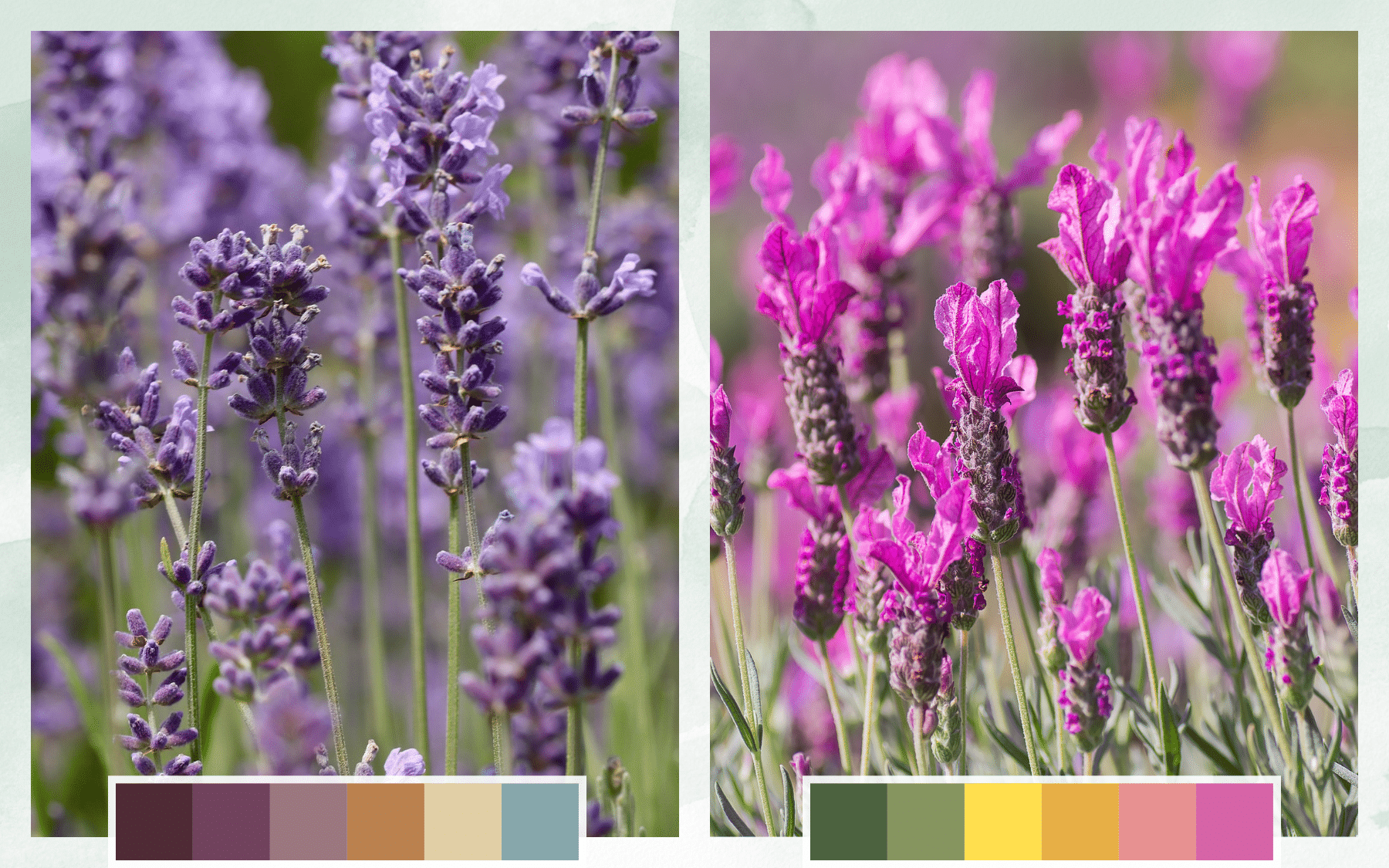
MOODY PALETTE: Grosso French Lavender
UPLIFTING PALETTE: The Princess Spanish Lavender
There are so many reasons to love Lavender plants—they smell wonderful, their blooms can be used in cut flower arrangements and herbal crafts, they support a huge range of pollinators and wildlife, and for the purposes of this list, they are incredibly drought tolerant! Lavender plants require very little to no supplemental Summer water. In fact, one of the most common issues with lavender that we diagnose is too much irrigation and over-watering.
Lavender can be seamlessly integrated into virtually any landscape design style, but is always an excellent choice near a pathway or patio, where passersby can experience its lovely aroma. Lavender plants perform best when replaced every 5 to 7 years, even with proper pruning, so don’t be surprised if you need a new one periodically!
5. The Best Drought-Tolerant Herbaceous Perennial: Coneflower (Echinacea)

MOODY PALETTE: Aloha Echinacea
UPLIFTING PALETTE: Apricot Fresco Echinacea
Echinacea, or Coneflowers, are a group of herbaceous perennials that have had a meteoric rise in the last few decades. Dozens, if not hundreds, of varieties of this low-maintenance, daisy-like flower are now available in every color of the rainbow. From pom-pom peaches, to delicate, whispy, pale lilac blooms, to sturdy, vibrant oranges and reds, there are Echinacea plants that can integrate easily and seamlessly into any garden aesthetic.
We love using Echinacea in combination with other drought-tolerant plants like the ones on this list, or with a diverse range of herbaceous, ornamental grasses or succulents like Sedum or Agave. No matter where it is planted, Echinacea is incredibly low-maintenance and can be left unattended after its initial establishment period.
6. The Best Drought-Tolerant Evergreen Grass: Sedge (Carex)

MOODY PALETTE: Leatherleaf Sedge
UPLIFTING PALETTE: Testacea Sedge
Sedges are an incredibly diverse group of plants, and while some species thrive in wet, boggy soils, we love using their drought-tolerant counterparts in set-it-and-forget-it sunny landscapes. These grass-like Carex plants are evergreen and low-maintenance and can tolerate full, hot sun and long periods without water.
When it comes to drought-tolerant sedge selections, an easy way to identify them is to look for thin, narrow, wirey foliage rather than broader, flatter leaves. Many drought-tolerant Carex species have a bronze or brown hue, making them a beautiful and unexpected addition to landscape beds.
7. The Best Drought-Tolerant Herbaceous Grass: Fountain Grass (Pennisetum)

MOODY PALETTE: Ginger Love Fountain Grass
UPLIFTING PALETTE: Karley Rose Fountain Grass
Pennisetum, or Fountain Grass, are among the most charismatic and beloved herbaceous grasses. Gently arching blades and stems topped with romantic, soft fuzzy plumes in creamy white or soft pink. Pennisetum sway in the breeze, bringing movement to the landscape, and are essential plants for creating a relaxed, Bohemian-style or prairie landscape.
While they are often planted on their own, surrounded by bark mulch by contractors thanks to their incredibly low-maintenance nature, we think that Fountain Grasses are at their best in mixed borders where they lend their grace to other perennials or grasses and create full, effortless plantings.
Bonus Tip: Plant a Tolerant Groundcover Like Sedum
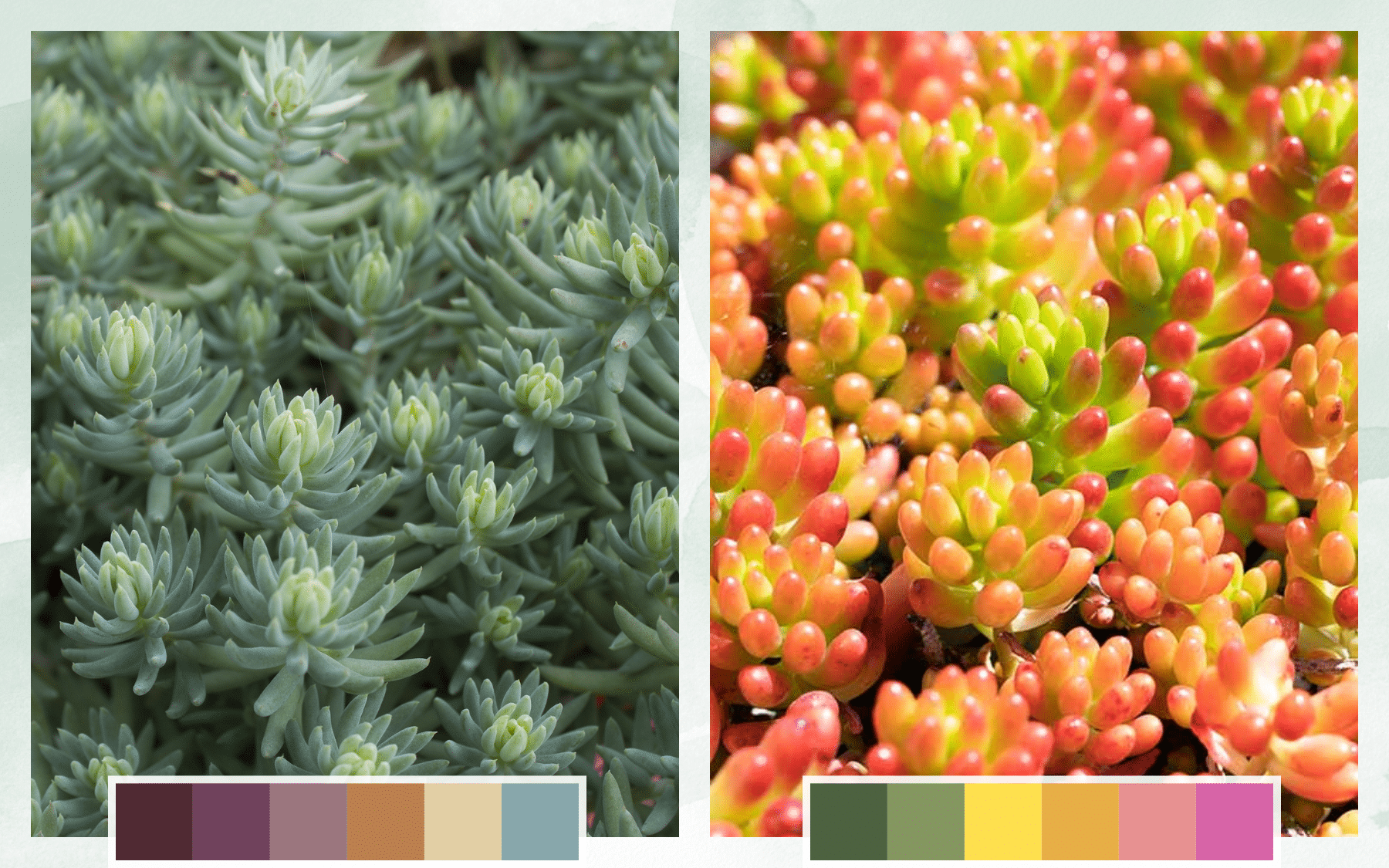
MOODY PALETTE: Blue Spruce Sedum
UPLIFTING PALETTE: Orange Ice Sedum
Drought-tolerant landscapes perform best when bare soil is covered to help conserve water and protect plant roots from extreme temperatures. While you can use compost, bark mulch, or even gravel, our favorite addition is a drought-tolerant groundcover like Sedum! Not only are there many native sedum varieties, their flowers help support pollinators in late-Spring, and the fabulous range of colors and textures help further establish a strong color palette and aesthetic in your garden beds. Sedums are the most attractive way to help conserve water and cover bare patches of soil in the landscape.